Search intent: between visit care psychiatry. This guide is written for owners and clinical directors who need practical systems rather than marketing slogans.
Source-informed from manuscript Chapters 10-11 and the DWA provider/treatment-integration pages: structured self-help, measurement-based care, MAIA, provider visibility, and treatment-adjacent positioning.
The answer in one paragraph
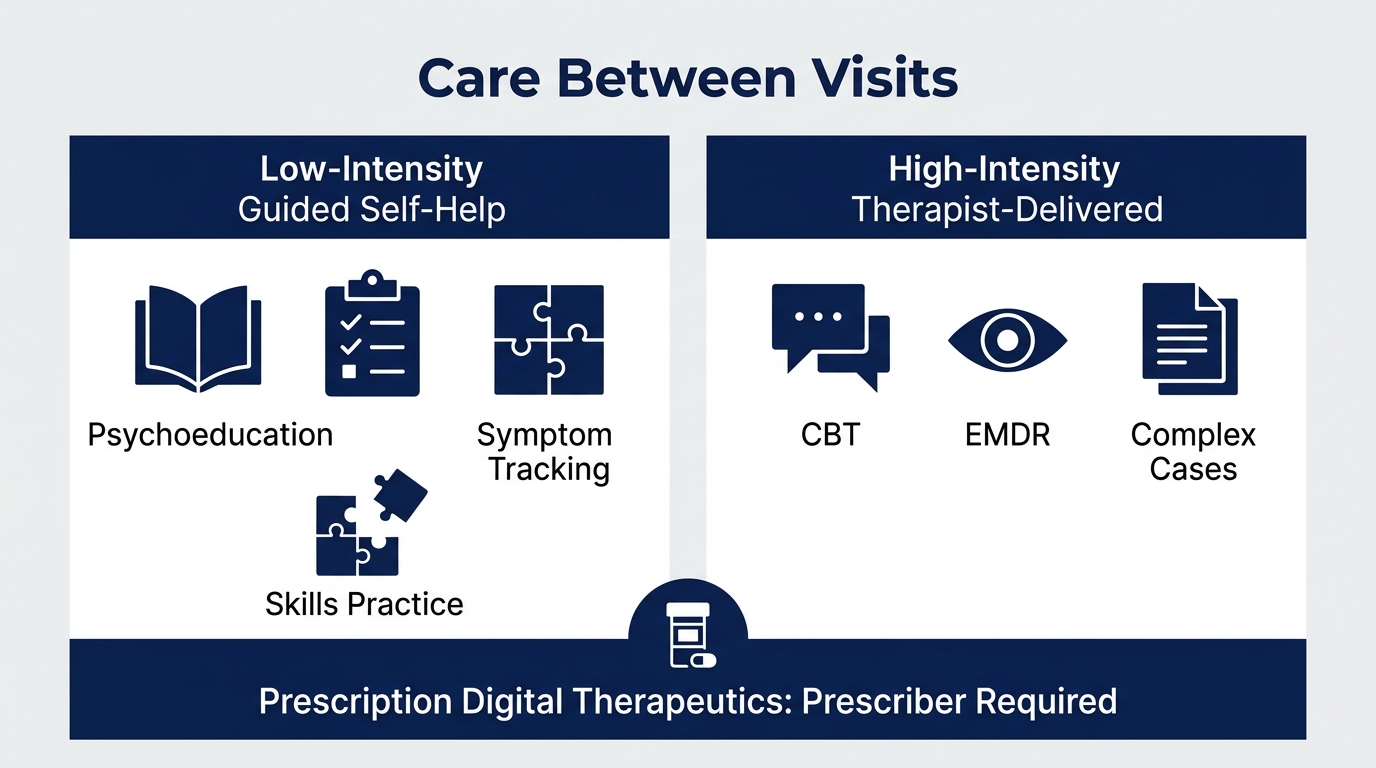
Between-visit care is structured support that helps patients practice skills, complete check-ins, and prepare better for the next appointment without pretending software is treatment. In The Autonomous Clinic model, Digital Wellness Academy is the care-extension layer: courses, assessments, AI coaching, safety routing, and provider visibility under the practice’s brand.
What it is not
It is not therapy without a therapist, a chatbot making treatment decisions, or a generic mindfulness app floating outside care. The DWA model is treatment-adjacent: clinicians can assign content, patients practice between sessions, and the provider sees engagement and risk signals. The human clinician still owns diagnosis, medication, treatment decisions, and follow-up.
What patients actually use
The DWA source site describes 81 courses, 964 short practice-first lessons, validated assessments, mood and symptom check-ins, interactive exercises, and an AI wellness coach that reinforces assigned skills. That concreteness matters. Between-visit care only works when it gives patients something specific to do, not just a vague encouragement to reflect.
Why measurement matters
A PHQ-9, GAD-7, PCL-5, mood trend, or completed lesson is useful only if it becomes visible in care. The provider dashboard and MAIA safety layer are important because they turn between-session activity into information a practice can review instead of unread data sitting in an app.
Implementation checklist
- Position the tool as support, not replacement.
- Make assignments visible to clinicians.
- Use validated assessments where appropriate.
- Route crisis language to real help and provider review.
- Review engagement before the next session.
Frequently asked questions
Does between-visit care replace therapy?
No. It extends skill practice, measurement, and preparation around clinician-led care.
What should a practice look for in a platform?
Assignment workflows, provider visibility, safety routing, validated assessments, and branding/licensing options.
How does DWA fit the practice model?
It is the care-extension layer practices can license under their own brand.