Search intent: EHR workflow automation psychiatry. This guide is written for owners and clinical directors who need practical systems rather than marketing slogans.
Source-informed from manuscript Chapters 6-8: the practice nervous system, EHR ceiling, API limits, intake automation, and surrounding workflow layer.
The answer in one paragraph
The EHR should remain the clinical system of record, but it should not be expected to become the whole operating system of the practice. Psychiatric practices often need workflow infrastructure around the EHR: intake forms, task routing, SOPs, provider handoffs, analytics, content operations, and patient education.
Why the EHR ceiling exists
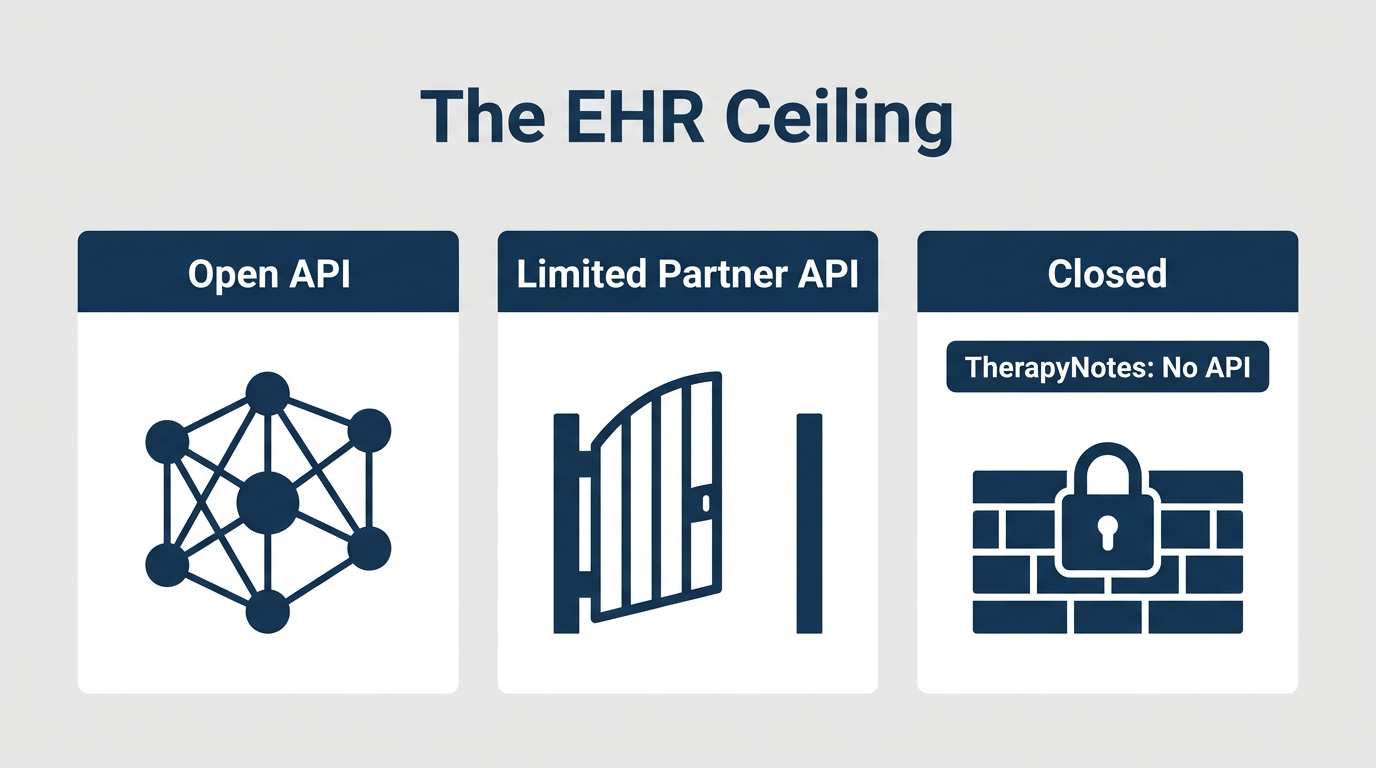
Most EHRs were built to document care, bill, schedule, and satisfy compliance requirements. Those are essential jobs, but they are not the same as building owned demand, managing a content engine, coordinating exceptions, or learning from patient questions. Closed or limited APIs make this harder because even good external workflows may still require a manual transfer step.
What should stay inside the EHR
Clinical notes, medication records, treatment plans, billing, and official patient records belong in the EHR. If a workflow changes clinical documentation or a signed record, it must respect the EHR’s role as source of truth.
What can live around it
Inquiry routing, pre-visit intake, e-signature packets, SOP libraries, staff onboarding, content calendars, review workflows, dashboarding, and between-visit education can often sit around the EHR. The trick is documenting where the handoff happens so staff do not invent a shadow process.
Implementation checklist
- Name the EHR’s API/interoperability category.
- Identify every manual transfer step.
- Keep clinical records in the EHR.
- Build SOPs for external workflow tools.
- Audit where PHI lives outside the EHR.
Frequently asked questions
Can a practice automate if its EHR is closed?
Yes, but some manual transfer steps may remain. The practice should know those limits before promising full automation.
Is it risky to add tools around the EHR?
It can be if PHI, access control, and workflow ownership are not documented. Done carefully, it is often necessary.
What is the first EHR-adjacent workflow to improve?
New patient intake is often the clearest starting point because it has repeated steps and measurable completion data.